How to Remove Rust From a Tub (and Keep It From Coming Back)
Most rust stains come out with a paste from your kitchen or a bathroom rust remover. Here is how to pick the right one for your tub, what to skip, and how to tell when the rust is coming from your plumbing.
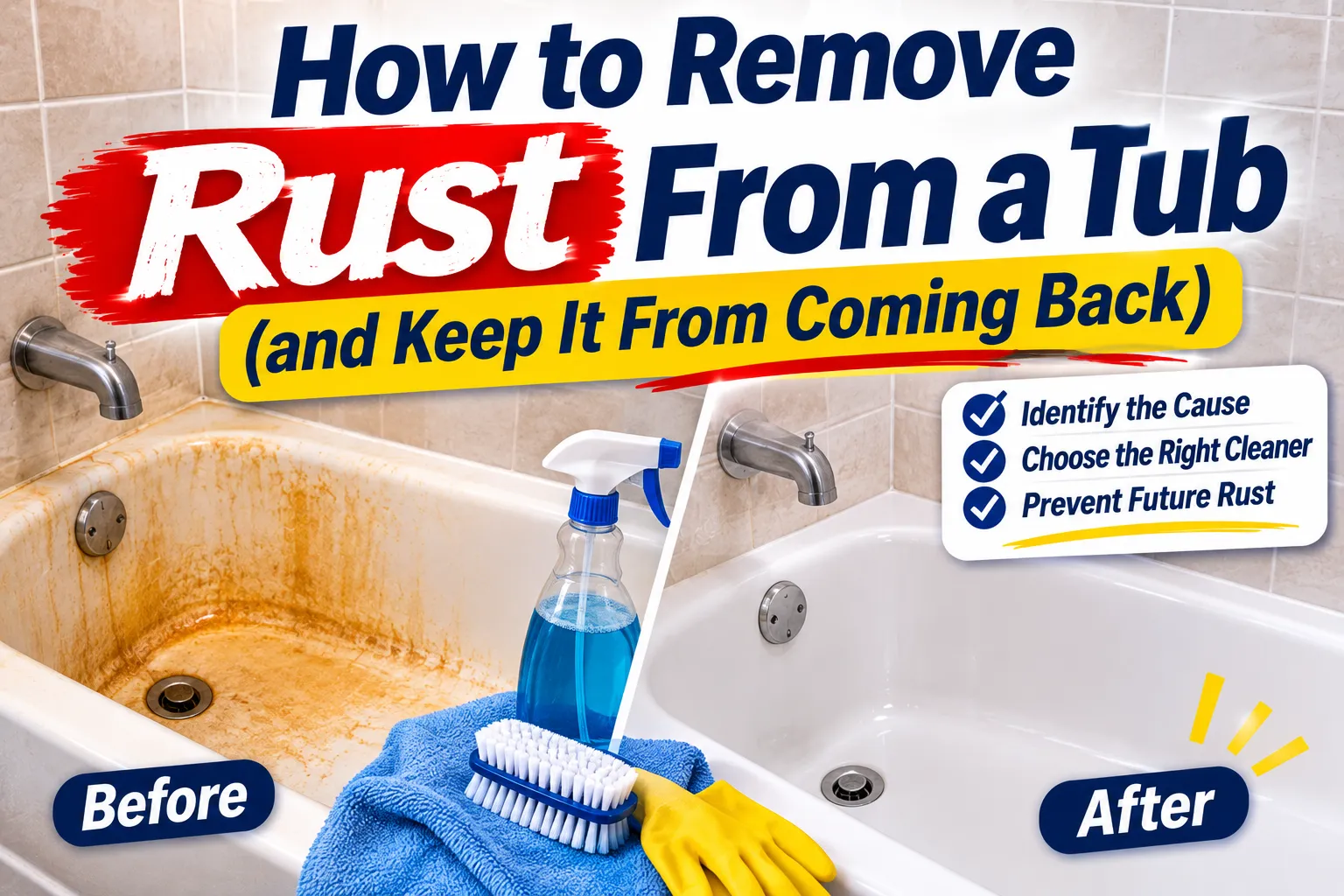
Most rust stains come off a tub with a lemon-and-salt paste, a baking soda scrub or a rust remover made for bathrooms, as long as you match the cleaner to your tub's finish and keep bleach away from it. The harder question is why the rust showed up. A ring under a shaving cream can is a ten-minute fix. Orange stains that come back within a few weeks usually mean something in your plumbing is rusting, and scrubbing will not fix that.
This guide covers both: how to get the stain out safely, and how to tell a cleaning problem from a plumbing problem. It comes from Real Texas Plumbing - Heating and Air, a family-owned Lago Vista plumbing company since 2018.
Is it rust, and where is it coming from?
Rust is iron that has reacted with water and air. So a rust stain on your tub means iron touched the surface from somewhere. Where the stain sits tells you where to look.
A round ring or spots where something sat. Shaving cream and hair spray cans, razors and metal bottles rust in a damp tub and leave a ring behind.
Stains around the drain, overflow plate or faucet. Those metal parts are wet all the time and wear out first.
Orange streaks under the faucet, or stains in the sink and toilet too. That points to iron in the water or rusting pipes.
A rough brown patch in the tub itself. On an older cast iron or steel tub, a chip or worn spot in the enamel lets the metal underneath rust.
White or tan crust is something else. Lago Vista's water is hard, and hard water leaves scale, not rust. Scale and rust can sit side by side, which is why a tub can still look dirty after you clean it. If scale is your problem, see our water softener installation page.
What is your tub made of?
Check before you pick a cleaner, because the finish decides how hard you can scrub.
Porcelain enamel over cast iron or steel. Heavy, cold to the touch, and a refrigerator magnet sticks to it. It handles more scrubbing than the other two.
Acrylic or fiberglass. Light, a little flexible, and a magnet does not stick. These scratch easily, and a scratch holds the next stain. Use a soft sponge and skip pumice and gritty powders.
Whatever you have, test any cleaner on a small spot out of sight first and give it a few minutes.
How do you remove rust from a tub?
Start with the mildest method and work up. Before you start, wash the tub with your usual bathroom cleaner and rinse it, so soap film does not block the treatment. Wear rubber gloves and run the bathroom fan or open a window.
1. Lemon juice and salt for light stains
Cover the stain with salt, squeeze lemon juice over it, and leave it 15 to 20 minutes. Scrub with a soft sponge or cloth and rinse well. Do not let it dry on the surface.
2. Baking soda paste for light to medium stains
Mix baking soda with a little water until it is as thick as toothpaste. Spread it on the stain, leave it 30 minutes to an hour, scrub gently and rinse. Repeat once if you still see color.
3. A rust remover made for bathrooms for stubborn stains
Look for a bathroom cleaner labeled for rust, such as one made with oxalic acid. Read the label for your tub's material, apply it, wait only as long as the directions say, and rinse the tub thoroughly. Do not mix it with any other cleaner.
4. A pumice stone, porcelain only, as a last resort
Wet the stone and the stain, use light pressure, and never work dry. Stop if you see scratching. Do not use pumice on acrylic or fiberglass.
A ring from a can usually comes out in one or two tries. A stain that has soaked into a worn finish may never come out all the way. At that point the problem is the finish, not your cleaning.
What should you never use on rust?
Bleach. It can make a rust stain darker instead of lighter.
Two cleaners at once. Bleach mixed with ammonia, or with acid cleaners (including vinegar, lemon juice and many bathroom cleaners), can give off toxic gas. Rinse the tub fully between products.
Steel wool and wire brushes. They scratch the finish and leave tiny steel bits behind that rust on their own.
Gritty scouring powder on acrylic or fiberglass.
Anything left on longer than the label says.
Rust around the drain, overflow plate and faucet
Metal parts rust fastest because they stay wet. An old toothbrush and the same methods above work on them. If the metal is pitted or flaking, or the rust comes back in days, the part is wearing out and needs replacing. A drain or overflow that is rusting through can also leak somewhere you cannot see. If you suspect that, read about leak detection.
Why does the rust keep coming back?
If the tub was cleaned well and the stain returns within a few weeks, find the source. These are the common ones.
Something metal in or on the tub. If the stain is a ring, move the can or razor and the problem is solved.
A chip or worn spot in the finish. A small chip can be touched up with a tub repair kit. Wear across a large area means refinishing or replacing the tub. That is a tub problem, not a plumbing problem, and we will tell you so.
Rusty hot water. Run the cold tap for a minute into a white cup, then the hot tap. If the cold water is clear and the hot water is orange or brown, your water heater is the likely source. A tank can rust from the inside, especially an older one. Flushing helps with sediment, but a tank that is corroding eventually has to be replaced. See water heater installation.
Rusty cold water too. Orange or brown water at the cold tap, or at several fixtures, points to older iron or galvanized steel pipe corroding inside. If your home runs on a private well, iron in the water is a common cause, and a water test will show it. Lago Vista's city water comes from Lake Travis and is treated and tested by the city, so rust at the tap is more likely to come from your own pipes or water heater than from the supply.
A house that sat empty. At a lake or weekend home, water that sat in the pipes for weeks can come out rusty on the first run. If it clears within a minute or two, that is usually water that sat in old pipe. If it stays orange, or it happens every day, have it checked.
Hard water does not cause rust, but the scale it leaves makes stains stick. If a test shows iron in your water, we will tell you which treatment fits and whether it is worth buying. See water filtration system installation.
When should you call a plumber?
Call if you see any of these:
Rusty water at more than one tap, or from the hot tap only
Water that stays orange after running a few minutes
Rust flakes or sediment in the water
Stains that come back within weeks of a good cleaning
Rust, dampness or a stain on the ceiling near the tub, drain or overflow
Lower water pressure along with rusty water
Here is how we work. A $65 trip charge covers the visit and is credited toward the work if you go ahead. The technician finds where the rust is coming from, you get your options and the price in writing, and nothing starts until you say yes. If the answer turns out to be a cleaner and a new can of shaving cream, we will say that too.
We serve homes in Lago Vista, Jonestown, The Hollows, Point Venture and around Lake Travis. Call (512) 662-2949, Monday to Friday 7:30 a.m. to 8 p.m. or Saturday 8 a.m. to noon. If water is running where it should not, shut it off first. We show you how in our guide to finding and shutting off your main water valve.
How do you keep rust off your tub?
Keep metal cans and razors off the tub edge. Use plastic bottles or a shelf.
Rinse and wipe the tub, especially around the drain, after use.
Fix a dripping faucet. A steady drip leaves a line.
Touch up chips early, before the metal underneath rusts.
Clean light stains quickly. Fresh rust comes out far more easily than old.
Run the water for a minute or two when you get back to a house that has been empty.
Frequently Asked Questions
Does vinegar remove rust from a tub?
Sometimes, on light stains. Vinegar is a mild acid and works slowly, so a baking soda paste or a rust remover made for bathrooms usually does the job faster. Do not combine vinegar with bleach.
Can you use bleach to remove rust from a tub?
No. Bleach does not lift rust and can make the stain darker. Mixing it with acid cleaners or ammonia also gives off toxic gas.
Why does my tub keep getting rust stains?
Something keeps putting iron on the surface: a metal can or razor, a chip in the finish, a corroding drain or faucet, or rusty water from your pipes or water heater. Check where the stain sits and use the section above to trace it.
Why is my hot water rusty but the cold water is clear?
That usually points to the water heater, because a tank can rust from the inside. A technician can tell you whether flushing will help or the tank is near the end of its life.
Will a water softener stop rust stains?
A softener treats hardness, which is calcium and magnesium. Rust comes from iron, so the right fix depends on whether there is iron in your water and how much. We will tell you what makes sense before you spend money.
Does rust in my tub mean my pipes are rusting?
Not always. A can ring or a chipped tub has nothing to do with your pipes. Rusty water at more than one fixture, or stains that return after cleaning, is a reason to have the plumbing looked at.