How to Protect Your Pipes From Freezing in Central Texas
How to get your pipes ready for a Texas freeze, protect a lake house you are away from, and what to do if a pipe freezes or bursts.
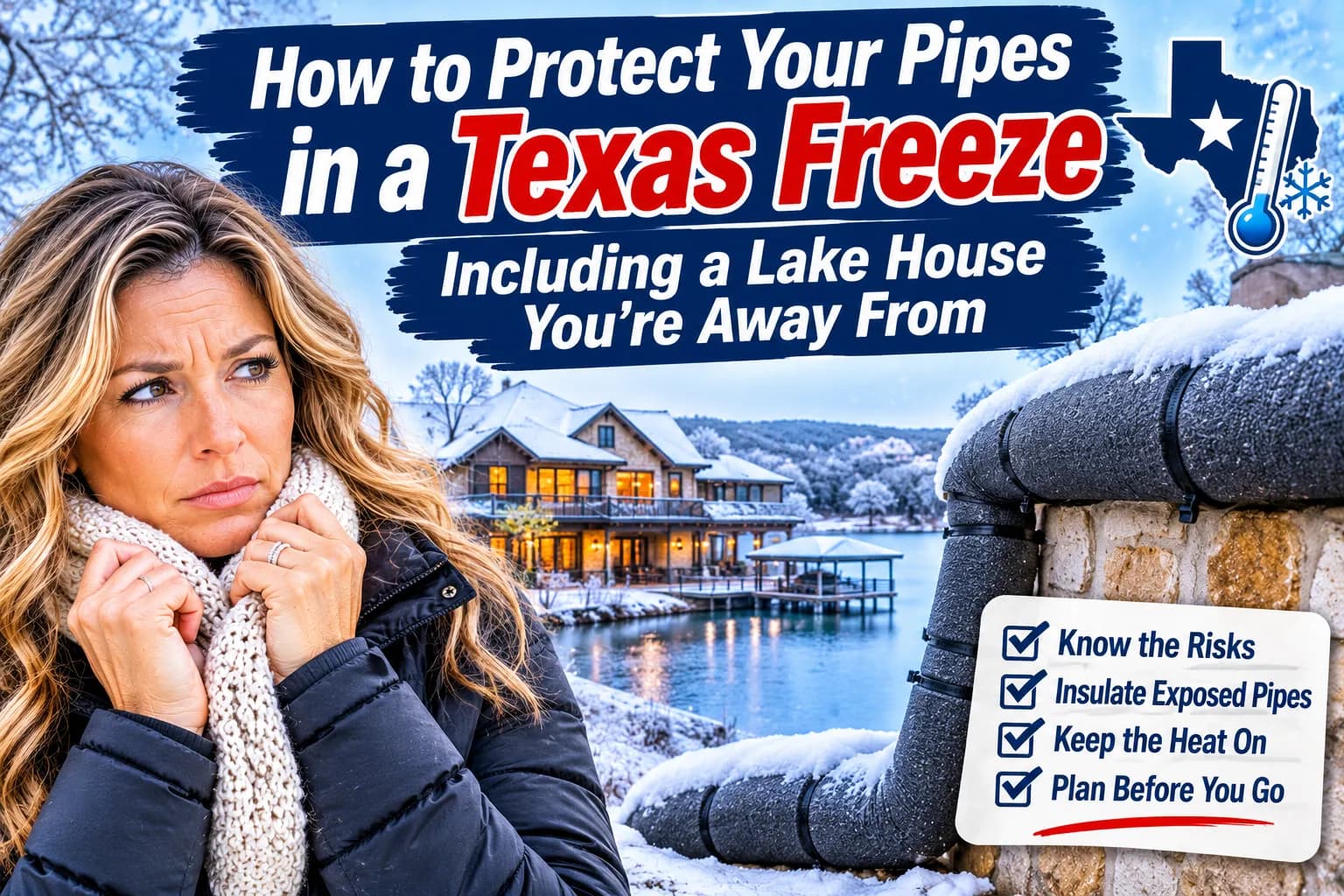
To protect your pipes in a Texas freeze, keep the heat on, let faucets drip, open the cabinets under your sinks, cover outdoor spigots and know where your main water shut-off is. If you are leaving home during a freeze, shut off the main water valve and keep the heat on. If a pipe freezes or bursts, shut the water off at the main and call a plumber.
Why do pipes freeze in Central Texas homes?
Pipes freeze first where the cold reaches them: attics, garages, crawl spaces, exterior walls and outdoor spigots. Exposed pipes can start to freeze once temperatures stay around 20°F or lower for several hours. Hard freezes are rare around Lake Travis, so many homes have pipes in those spots with little protection.
Water expands as it freezes, and that pressure can split a pipe or a fitting. The leak often does not show up until the ice thaws.
What should you do before a freeze?
Find your main water shut-off valve and make sure it turns. Our guide to the main water valve shows how.
Disconnect garden hoses and cover outdoor spigots.
Drain and shut off your lawn sprinkler system.
Open the cabinet doors under sinks, especially on exterior walls, so warm air reaches the pipes.
Let hot and cold indoor faucets drip overnight, starting with those on exterior walls. Follow any local water-use limits.
Keep the heat on, including at night.
Insulate exposed pipes in the garage, attic or crawl space, and shut off the water to a washer in an unheated garage.
Let indoor faucets drip, but do not drip outdoor ones. Cover those instead.
How do you protect a lake house or second home you are away from?
Shut off the main water valve and keep the heat on. That is the Texas Department of Insurance's advice for anyone who leaves home during a freeze.
For a longer stay away, open the faucets and flush the toilets after the main is off so the lines drain, and set the thermostat no lower than about 55°F. Ask someone you trust to check the house every day or two during a hard freeze. Keeping the heat on matters for insurance as well, because some policies may not cover frozen-pipe damage if you did not take protective steps.
What should you know if your home has a grinder pump?
The pump runs on electricity, so a freeze that also knocks out power stops it, and the tank holds only a limited reserve. If the alarm sounds, stop using water and follow the steps in our grinder pump guide, then call us.
What should you do if a pipe freezes?
Shut off the water at the main valve, open the faucet on the frozen line, and thaw the pipe slowly with a hair dryer. Shutting the water off first keeps a cracked pipe from leaking when the ice melts.
Never use an open flame to thaw a pipe.
If the frozen section is inside a wall, ceiling or slab, or you cannot find it, call a plumber.
Do not wait. Delays can make the damage worse.
What should you do if a pipe bursts?
Shut off the main water valve right away, turn off power to the affected area if it is safe, and call a plumber. Move belongings out of the water's path, and take photos of the damage before you clean up so you have them for your insurance claim.
Our guide to hidden leaks explains how to confirm a leak you cannot see.
Frozen or burst pipe near Lago Vista, Jonestown, The Hollows or Lakeway?
Our broken pipe repair service covers frozen and burst pipes. Repair starts at $800, and we give you a written price before any work starts. Our $65 trip charge is credited toward the work when you schedule the job. We are a family-owned company, and have been since 2018.
Frequently asked questions
Should I let my faucets drip during a freeze?
Yes. A slow drip of both hot and cold keeps water moving, which helps prevent freezing. Start with faucets on exterior walls, and follow any local water-use limits.
What should I set the heat to when I am away?
Keep the heat on. About 55°F is a common recommendation for a home you are away from.
Should I shut off the water if I leave for a few days?
Yes. If you leave during a freeze, shut off the main water valve and keep the heat on.
Does homeowners insurance cover a burst pipe?
Many policies cover sudden, accidental water damage, and flood insurance does not cover burst pipes. Coverage varies, so ask your agent, and keep records of the protective steps you took.
How much does it cost to repair a frozen or burst pipe?
Frozen or burst pipe repair starts at $800. The final price depends on where the damage is and how much needs to be repaired.